Doodle Heart: A Sketch-Style Dingbats Font for Creative Branding
Testing Doodle Heart for a Local Café’s Visual Identity
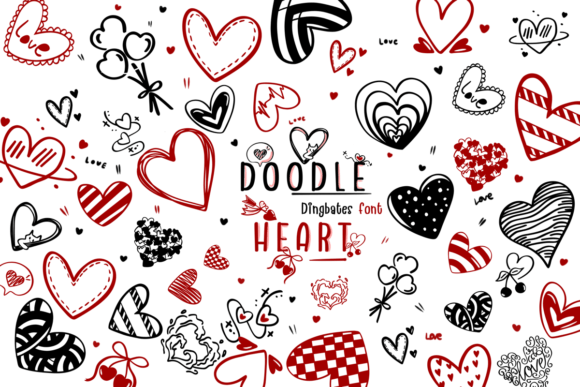
When I opened my design board for a new café branding project, I knew the client wanted something warm, approachable, and handcrafted. The brief mentioned a love for sketch-style illustrations and a desire to stand out in a sea of minimalist brands. That’s when I remembered Doodle Heart—a dingbats font with a playful, hand-drawn theme that felt like the perfect fit for this small business. I wasn’t sure yet, but I was curious to see how it would translate from font sample to real-world brand application.
Doodle Heart in Logo Design: First Impressions
I started by testing Doodle Heart as a secondary accent in the logo. The font’s sketch-style lines and whimsical heart motifs immediately added a sense of charm and personality. It wasn’t meant to carry the main brand name, but as a supporting dingbats font, it brought a unique visual texture that elevated the overall design. I used it subtly in the corner of the logo mark, where it added just enough flair without overpowering the clean sans serif typeface I’d chosen for the café’s name.
How Doodle Heart Works in Packaging Design
Once the client approved the initial direction, I moved into packaging mockups. I used Doodle Heart as a decorative border element on coffee sleeves and custom thank-you tags. The font’s sketch aesthetic blended beautifully with the kraft paper textures and hand-drawn illustrations I was incorporating. Since it’s a dingbats font, it wasn’t about legibility—it was about adding a tactile, artistic vibe that made the brand feel more personal and human.
Pairing Doodle Heart with Other Fonts
One of the first things I tested was how Doodle Heart paired with different typefaces. As a dingbats font, it’s not designed for long-form text, but it plays very well with others. I found that combining it with a soft serif font for subheadings and a clean sans serif font for body copy created a layered, yet cohesive typographic system. This kind of font pairing is essential when using a decorative font like Doodle Heart—it keeps the brand feeling professional while still allowing for creative expression.
Doodle Heart for Social Media Graphics and Web Headers
The café’s digital presence was just as important as the physical materials. I used Doodle Heart in Instagram story templates, placing it behind short promotional text to add a handcrafted touch. On the website, I applied it sparingly in the hero section, using it as a background texture behind the main headline. Because of its sketch-style nature, it didn’t compete with the primary message—it enhanced it. This is where Doodle Heart shines: as a display font that supports rather than dominates.
Real-World Readability and Brand Perception
While Doodle Heart isn’t a workhorse font for body copy, it has a strong visual voice. I made sure to only use it in contexts where readability wasn’t critical—like decorative elements, icons, or accents. The client loved how it gave their brand a sense of warmth and authenticity, which aligned perfectly with their mission to be a community-focused café. It’s a reminder that not every font has to be highly legible to be effective—sometimes it’s about mood and emotional resonance.
Testing Doodle Heart Across Print Materials
I printed several samples to see how Doodle Heart translated to physical media. From business cards to menu boards, the font held up surprisingly well at different sizes. At smaller scales, it became more of a texture than a defined graphic, which worked in our favor. We used it on the back of business cards as a subtle branding detail and on packaging stickers as a decorative flourish. It’s a versatile dingbats font that adapts depending on the context, which is a big plus for designers working across multiple brand touchpoints.
What to Look for When Downloading Doodle Heart
Before committing to the font for the full brand system, I always check what styles and formats are included. Doodle Heart came with a standard set of dingbats glyphs, and I was able to access alternates and ligatures that added variety to the designs. I also made sure the font supported the necessary character sets for the café’s local market and that it was properly licensed for commercial use. These are small but important details that can affect the font’s usability in real client work.
Using Doodle Heart for DIY and Craft Projects
Outside of branding, I’ve also used Doodle Heart for personal DIY projects—like handmade greeting cards and seasonal décor. Its sketch-style aesthetic makes it ideal for crafters and hobbyists who want to add a bit of whimsy to their designs. Whether it’s laser-cut vinyl for wall art or a simple SVG file for a Cricut machine, this dingbats font translates well across creative platforms. It’s a great example of how a font can bridge professional design and personal creativity.
Final Brand Deliverables Featuring Doodle Heart
In the end, the café’s brand identity felt cohesive, warm, and distinct. Doodle Heart played a supporting role throughout the system, but its presence was unmistakable. It was used in the website’s favicon, on custom tote bags, and even in the corner of printed receipts. The client appreciated how the font helped tell a story—of a small, locally-owned business with a handcrafted heart. As a designer, that’s exactly the kind of impact you hope for when choosing a font like Doodle Heart.