4th July Font: A Sketched Dingbat for Creative Branding Projects
4th July Font for Wedding Invitations and Handmade Branding
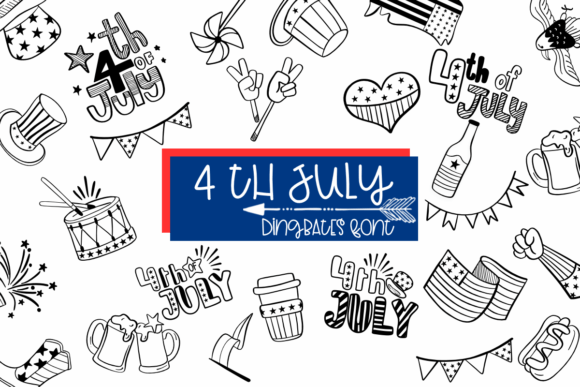
Opening a new brand board for a local artisan shop, I reached for something different—something with a handcrafted edge. That’s when I dropped in 4th July Font. As a dingbats font with a sketched theme, it immediately brought a playful, organic energy to the layout. I tested it on a series of wedding invitation mockups, and it landed somewhere between whimsical and rustic. It’s not a font for formal calligraphy or sleek minimalism, but if you’re aiming for a handmade aesthetic, it’s a strong contender.
Using 4th July Font in Logo Design and Brand Identity
I applied 4th July Font to a logo draft for a boutique coffee shop’s rebrand. It wasn’t the final logo choice—its character is too loose for a clean café vibe—but it worked surprisingly well in early explorations. The sketched look gave the brand a more approachable, community-driven feel. In brand identity work, this font shines best as an accent or secondary typeface. It’s not ideal for primary logo use unless the brand leans heavily into a hand-drawn, DIY aesthetic.
4th July Font in Packaging Design and Product Labels
When I placed 4th July Font on a bakery packaging mockup, it felt right at home. The slightly irregular lines and sketchy texture gave the label a warm, artisanal quality. It worked well for short phrases like “Handmade with Love” or “Small Batch,” where readability wasn’t as critical as charm. For longer product descriptions or nutritional info, I switched to a cleaner sans serif, but for decorative elements, this font added a distinct personality that standard fonts just don’t offer.
4th July Font for Social Media Graphics and Web Headers
Testing 4th July Font in a website header and Instagram post layout, I noticed it performed best at larger sizes. At a glance, it reads clearly on hero sections and story highlights, where bold visuals matter more than fine detail. It’s not a font for paragraph text or small captions. But as a decorative header or quote overlay, it brings a personal, handcrafted touch that helps brands stand out in a sea of uniform typography. Just be mindful of background contrast—its sketched texture can get lost on busy images.
Pairing 4th July Font with Other Typefaces
One of the best ways to use 4th July Font effectively is in combination with a stronger, more structured typeface. I paired it with a modern sans serif for a handmade soap brand’s social media assets. The contrast between the crisp body text and the sketchy headline created a balanced visual hierarchy. It also pairs well with script fonts for a soft, organic feel—perfect for wedding-related branding or boutique packaging. Always test font pairings in real layouts before finalizing, especially with a decorative font like this.
When Not to Use 4th July Font
While 4th July Font has its strengths, it’s not a one-size-fits-all solution. I found it too informal for corporate branding, too loose for technical documents, and too textured for long-form editorial design. It’s not recommended for body copy, especially in small sizes, where its sketchy nature can become distracting or hard to read. If you’re designing for a luxury brand, a law firm, or a tech startup, this font probably won’t fit the tone. Stick to using it as a decorative accent or thematic headline font in creative, informal, or handmade-focused projects.
Testing 4th July Font Before Final Use
Before locking in 4th July Font for a client or print project, always test it in context. Load it into a packaging mockup, apply it to a business card layout, or preview it on a mobile screen. See how it holds up in different sizes and against various backgrounds. Some dingbats fonts come with alternate characters or ligatures, so check what styles are included. Also, verify that the font supports the languages and special characters you’ll need, especially if the brand has an international audience or uses non-English copy.
4th July Font: A Decorative Dingbat for Creative Projects
Overall, 4th July Font is a niche but valuable addition to a designer’s toolkit. It’s best suited for wedding invitations, DIY crafts, handmade shop branding, and festive decorations where a sketched, informal tone is desired. As a dingbats font, it’s more about visual storytelling than readability. Use it to add character to logos, packaging, or social media graphics—but pair it wisely and test thoroughly. If you’re looking for a decorative font that feels personal and artistic, this one is worth exploring for your next creative project.